How to Choose Pleated Blind Fabric?
2 Ağustos 2026 {{ count }} views
How to Choose Pleated Blind Fabric?
Fabric choice in pleated blinds determines much more than appearance: light control, privacy, thermal insulation, cleanability and... even the lifespan of the blind. Wrong fabric choice is the most common purchasing mistake — like putting sheer fabric in a bedroom or blackout in a dark corridor. Four criteria are considered for the right choice: light transmission, room needs, texture structure and ease of maintenance.
Light Transmission Levels
| Fabric Type | Light Transmission | Best For |
|---|---|---|
| Sheer | 70-90% | Living rooms, offices — soft diffused light |
| Screen | 5-15% | TV glare reduction, view preservation |
| Dimout | 1-5% | Bedrooms, meeting rooms — partial blackout |
| Blackout | 0% | Bedrooms, home theaters — total darkness |
| Honeycomb | Varies | Energy efficiency, thermal insulation |
By Room Type
- Living room: Sheer or screen for natural light, dimout for TV glare
- Bedroom: Blackout for sleep quality, dimout for daytime use
- Kitchen: Screen or dimout — grease-resistant, easy to clean
- Bathroom: Moisture-resistant polyester, blackout for privacy
- Office: Screen for glare reduction, sheer for bright spaces
- Children's room: Blackout for naps, fun colors and patterns
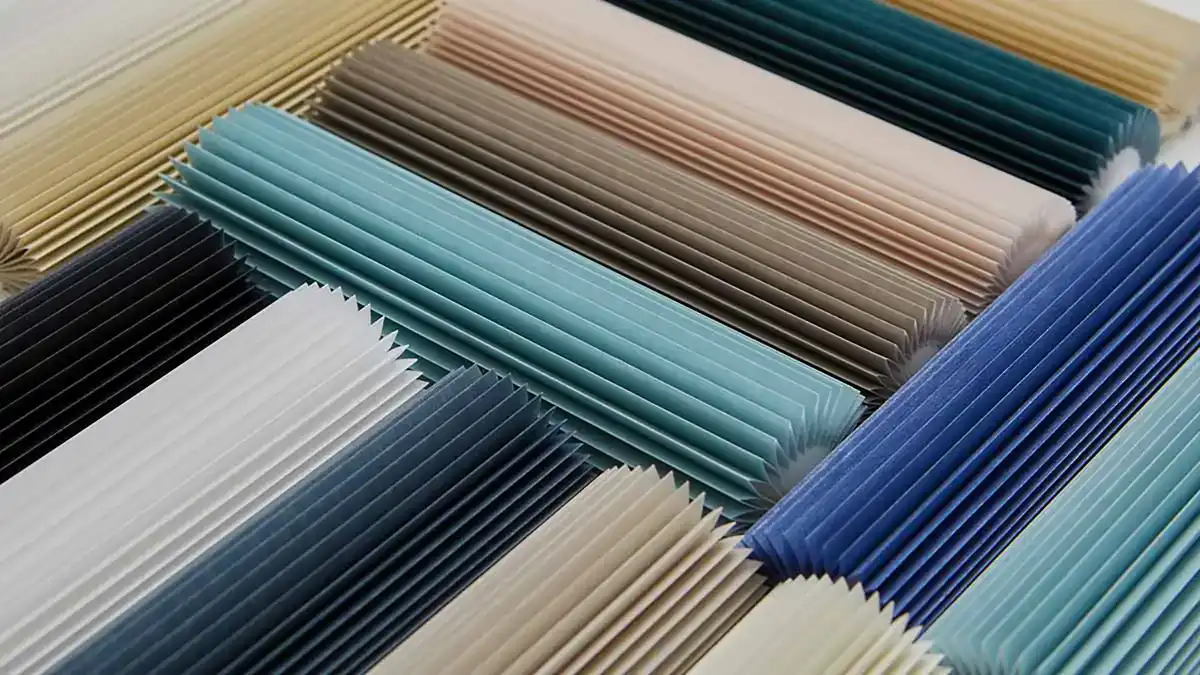
Texture and Pattern Options
Pleated blind fabrics come in hundreds of colors and patterns: solid colors, wood grain textures, linen weaves, geometric patterns and custom prints. The pleated structure gives even plain fabrics a rich, dimensional look.
Maintenance Considerations
- Antistatic: Repels dust, ideal for allergy sufferers
- Stain-resistant: Treated fabrics repel spills
- Wipeable: Most fabrics can be cleaned with a damp cloth
- Washable: Some fabrics are machine-washable (check care label)
Frequently Asked Questions